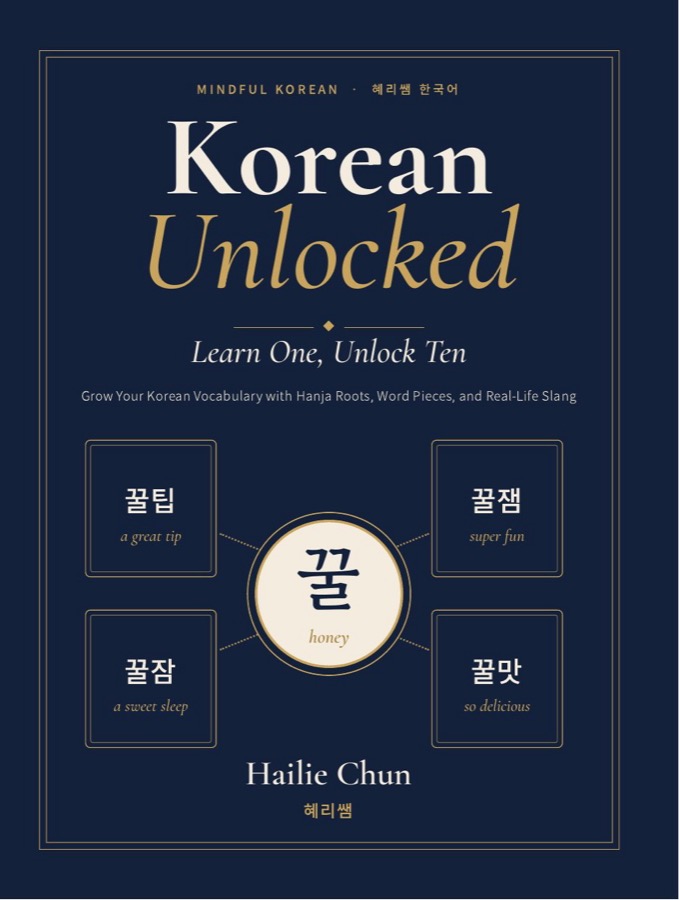
Korean Unlocked
16 units, 160 everyday words in mind maps: hanja roots, word pieces and a little real-life slang.
人 인님生 생꿀 · 찐
Korean words are built from small, reusable pieces. Learn 人 (person) once and 미국인, 외국인, 인간 and 인생 stop being four words to memorize. They become one idea with many faces.
No rote lists and no grammar-translation drills. Every word is met inside its family, written by hand, used in a real situation, and met again later.
Well over half of Korean words come from Sino-Korean roots. Native pieces work the same way: add 집 to 빵 and you get 빵집, a bakery.
Some memory hooks are strange on purpose. An odd picture is processed deeply, and words processed deeply move into long-term memory.
You need the words Koreans really use, like 꿀잼, 최애, 멘붕. Mistakes are not failures here. They show that you are talking.
The gap between what an expression says and what it means is the hook. Picture the eyes sitting up high and you won’t forget it. From Korean Unlocked 4, Unit 2 · 눈.
Three vocabulary books build words from roots and pieces. The fourth turns to idioms: how Koreans really talk.
16 units, 160 everyday words in mind maps: hanja roots, word pieces and a little real-life slang.
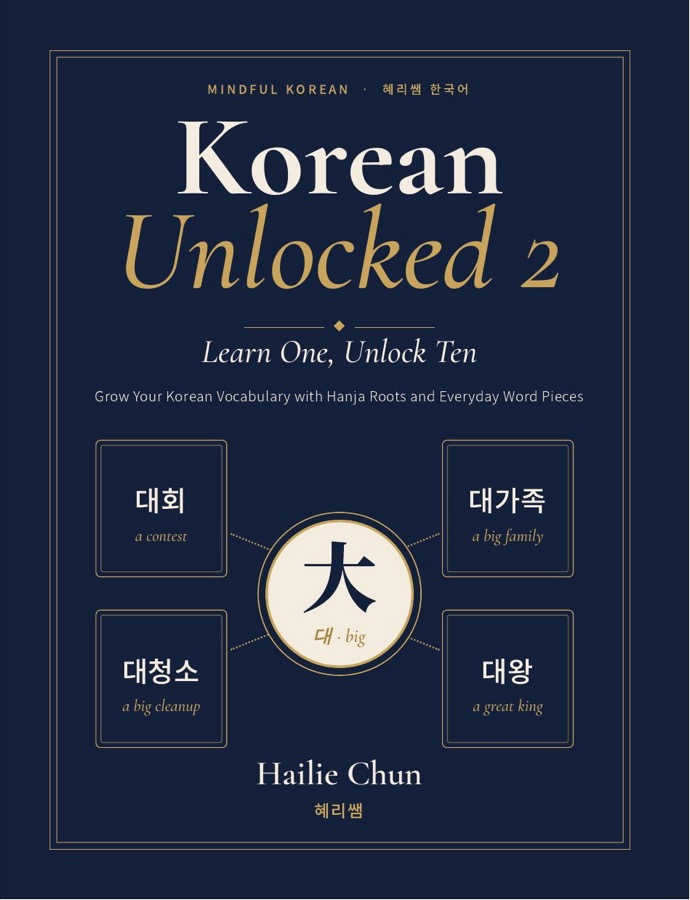
New hanja roots and the word pieces of everyday life, from family words to the chatterbox, 수다쟁이.
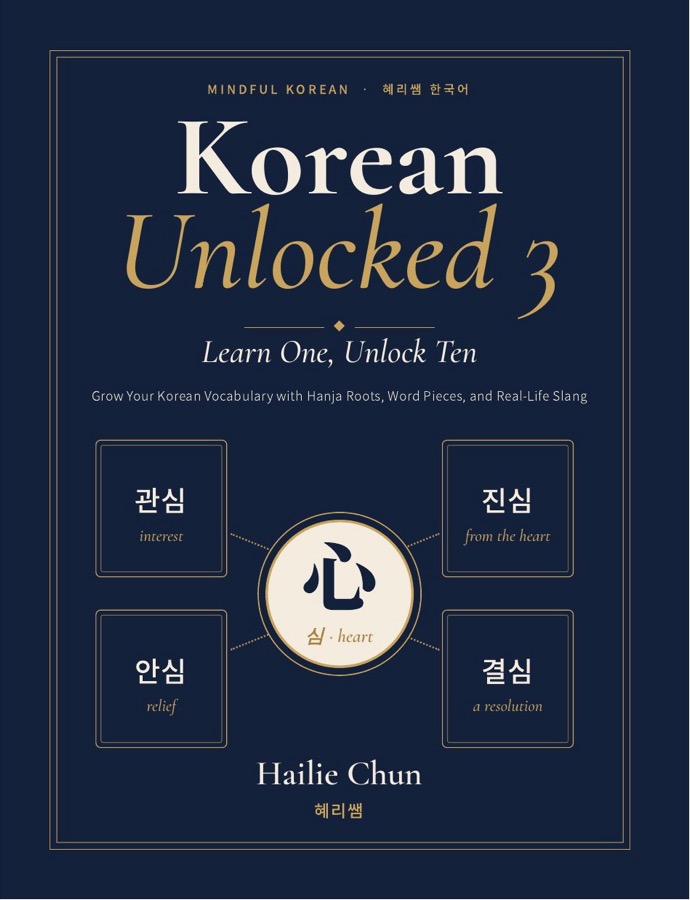
Deeper roots plus the living language of texts and comments: 갓생, 최애, 줄임말 and reactions.
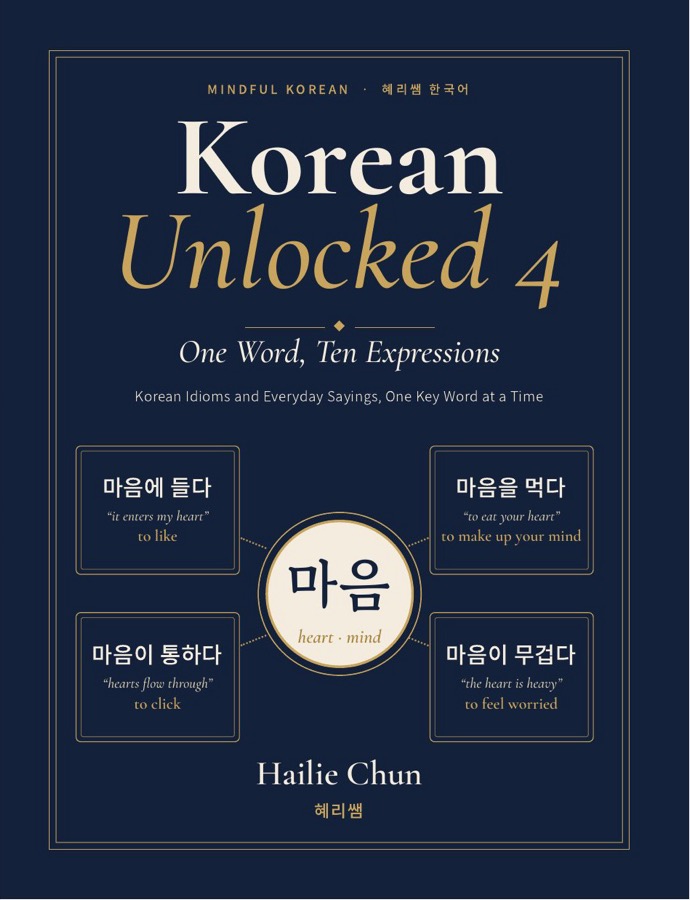
14 everyday words, ten idioms each. Why 밥 means more than rice, and why 정 is so hard to translate.
Every unit comes with a slide deck that follows the book page by page, so you can teach it straight from the screen.
Teaching Korean and want to use the slides? Get in touch with 혜리쌤.
From the Unit 1 deck (人 인), 31 slides.
I’m Hailie Chun, a California-credentialed Korean language teacher. I have taught Korean to elementary and high school students and to heritage learners in Orange County, California, and I bring about 15 years of experience in child psychology and play-based learning to every lesson I design.
“Language is for connection, not perfection.”